Minesing Reeds – Summer 2014

The Friends of Minesing Wetlands have had a busy start to year and we have captured some of this work in the Summer 2014 Minesing Reeds newsletter.

Enjoy stories from the Minesing Wetlands including Dave Featherstone relaying results from the Marsh Monitoring Program and scouting the Mad River canoe route!

You will read about how the Friends of Minesing participated in several community events this year including the Water Walker Festival, MEC Paddlefest and the Celebration of Rural Living with Margaret Atwood.

We also show our support for the Nine Mile Portage trail and efforts to improve it’s accessibility.  The Nine Mile Portage is an historic route used by First Nations and early Canadians that connects Lake Simcoe to the Minesing Wetlands.

Please enjoy the Summer 2014 edition of the Minesing Reeds!

Minesing Reeds – Summer 2014

Ontario Trumpeter Swan Restoration

The Friends of Minesing Wetlands support the efforts of the Ontario Trumpeter Swan Restoration program and their efforts to improve the population of Trumpeter Swans to Ontario.  The Minesing Wetlands is a part of this species migrating and breeding range.  If you are interested in more information about this program please see the brochure below with information about reporting sightings of the Trumpeter Swan in the Minesing Wetlands.

The brochure also has tips for protecting and aiding in the recovery of Trumpeter Swans in Ontario.

Currently the Trumpeter Swan population in Ontario is estimated at 800-1000 individuals and growing, which is good news for the restoration of this species to its former migration and breeding range.

To report sightings please visit their facebook page: Ontario Trumpeter Swans

To view their brochure in PDF form click: OTSR Brochure

Empowering Citizen Scientists

Bird Studies Canada has invited interested members of the Friends of Minesing Wetlands to partake in a day learning what the Great Lakes Marsh Monitoring Program is and how you can be a part of it. See below for details. To register click here: Empowering Citizen Scientists

Event Details

Bird Studies Canada, through support from Government of Canada’s Lake Simcoe/South-eastern Georgian Bay Clean Up Fund and in partnership with Nottawasaga Valley Conservation Authority is hosting an orientation workshop and social for the volunteer-based Great Lakes Marsh Monitoring Program (GLMMP) .


Spend the afternoon with us at the Tiffin Centre Picnic Pavilion to:

  • Refresh your knowledge or be introduced to the techniques used in the nationally-recognized GLMMP with the folks who coordinate it.
  • Help advance the study and protection of marshes in YOUR watersheds.
  • Contribute to knowledge and understanding of coastal and interior marshes including gathering information on birds, frogs and habitat characteristics.
  • Classroom portion runs 2:00 – 5:00
 
Join us for a social evening outdoors sharing knowledge.
 
Picnic with us:
  • Bring your own supper and enjoy a picnic at the pavilion before we go into the  field. 
  • We will be picnicking from 5:30 -7:00 before traveling to Minesing Wetlands
 
Come birding and frogging at the Minesing Wetlands viewing station: 
  • At 7:30 pm we will reconnect at the viewing station parking lot.
  • For a map visit http://goo.gl/maps/OZGVM  
  • Then spend an evening of birding and frogging with Bird Studies Canada’s Doug Tozer and Kathy Jones.
  • Share your wetland id knowledge or learn from others.
  • Experience the GLMMP techniques in a natural setting.


All are welcome!

  • New naturalists can come and learn about the program and decide if it is right for them.
  • Registered  participants can update their knowledge and enjoy the evening.
  • You can choose to attend the classroom activity, the evening event or both. Just pick the tickets that suit your schedule best and all attendees are welcome at the picnic.
 

This is a free event but donations for access to the NVCA are always welcome.

Minesing Wetlands Dragonfly Count

The Nature Conservancy of Canada is seeking volunteers who are keen to support the conservation of Canada’s natural places.  On July 1, 2014 the NCC will lead participants into the Minesing Wetlands for a Dragonfly Count.
Instruction on species identification, conservation and biology will provided by an expert NCC staff member.  Notable dragonfly species in the Minesing Wetlands includes the Endangered Hine’s Emerald Dragonfly.
“A flash of colour catches your eye, a thrum of wing beats whooshes past. Is it a bird? Is it a helicopter? It’s a dragonfly! Get to know these stunning insects while you help NCC monitor the dragonfly diversity of the Minesing Wetlands during the 2014 Dragonfly Count.”
Any questions contact Laura at ontario@conservationvolunteers.ca

To register follow this link: Minesing Wetlands Dragonfly Count and fill out the R.S.V.P. form.


Spring Paddles 2014

Paddle the Minesing Wetlands

The Friends of Minesing Wetlands (FOMW) are excited to announce the dates for our annual spring paddle in the Minesing Wetlands.  They are:

April 12, 2014

May 3, 2014

May 17, 2014

To R.S.V.P. for one of these paddles (space is limited) please contact nsaunders@nvca.on.ca

All trips depart from the Willow Creek Canoe Coral on George Johnson Road (County Road 28) and will take approximately 5 hours.

Dress appropriately for the conditions of the day, which should include high cut boots for possible portages.  Bring your own warm drinks, water, and snacks for the go – as well as a packed lunch for our break around noon.

Midday break for lunch

Midday break for lunch

At least a basic paddling know-how is required for this trip and ensure that you bring the required safety equipment for your boat (life jacket, bailer, throw rope, whistle, flashlight). We can arrange for the rental of canoes and life jackets if needed.

The cost is $40 for non-members and $20 for members.  This includes safe passage with certified leaders and ecological interpretation of the Minesing Wetlands.

Second Snowshoe to Minesing Heronry

The Friends of Minesing Wetlands will be leading a second snowshoe to the Minesing Wetlands heronry on Saturday March 1, from 10am until approximately 2pm. Departure is from the corner of Glengarry and Ronald Road.

The snowshoe is a moderate hike to the current Great Blue Heron nesting site in the Minesing Wetlands. This heronry is one of Southern Ontario’s oldest and was once one of the largest. The nesting sites are located close to the Nottawasaga River levee where more stable trees provide nesting habitat for these big birds!

The FOMW are supporting afforestation initiatives in the Minesing Wetlands by collecting Hackberry tree seeds, which will act as nursery crop for tree planting projects aimed at bolstering tree cover in the wetlands. Improving forest habitat for will benefit birds, fish and other wildlife.

To be a part of this special look at the Minesing Wetlands contact minesingwetlands@gmail.com

The cost of this trip is $15 for non-members and $10 for members.  If you are interested in further supporting the Minesing Wetlands, our yearly membership is $20 and includes a Conservation Lands Pass from the Nottawasaga Valley Conservation Authority.

Minesing Reeds – Winter 2014

The Friends of Minesing Wetlands have published their Winter 2014 edition of the Minesing Reeds.

Featured articles include:

  • A Forestry Adventure on the Nottawasaga River
  • Recap of FOWM 2013 AGM and “Funspeil”
  • Forest Change in the Minesing Wetlands
  • Two Men, Two Kayaks and a Minesing Story

For past editions see the Minesing Reeds Newsletters tab

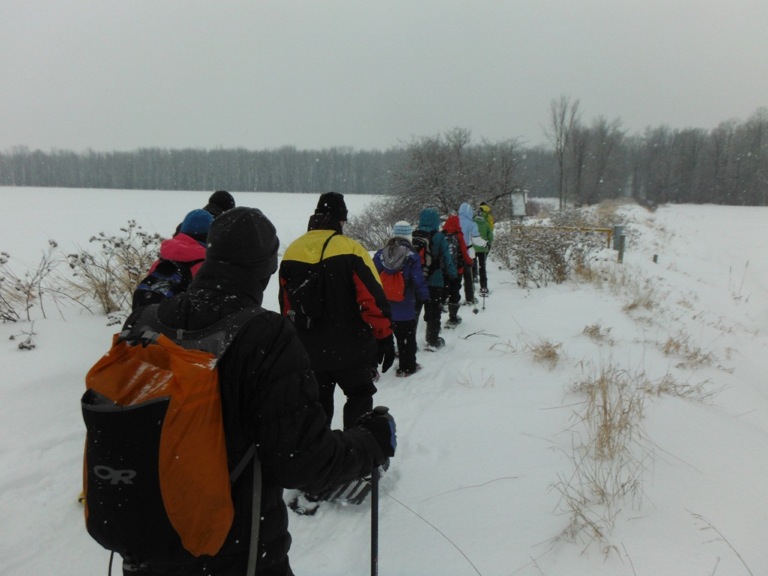
Highlights from February 1, 2014 Snowshoe

The Friends of the Minesing Wetlands celebrated World Wetlands Day by leading a snowshoe into the Minesing Wetlands. Our goal was to locate the current location of heronry (or rookery) and get a count on the current number of nests. We also wanted to share knowledge on past and current ecological conditions in the Minesing Wetlands.

It was a blustery day to for a snowshoe led by FOWM directors Sean Rootham, Dave Featherstone and David Walsh…

And we're off

And we’re off!

The FOMW crossed Willow Creek and then on to the Nottawasaga Levee. Although the overcast skies and heavy snow limited views, the group was still able to see the expansive floodplain. We came across examples of challenges facing the Minesing Wetlands including invasive species.

Phragmites at Downey Drain Crossing

Phragmites at Downey Drain Crossing

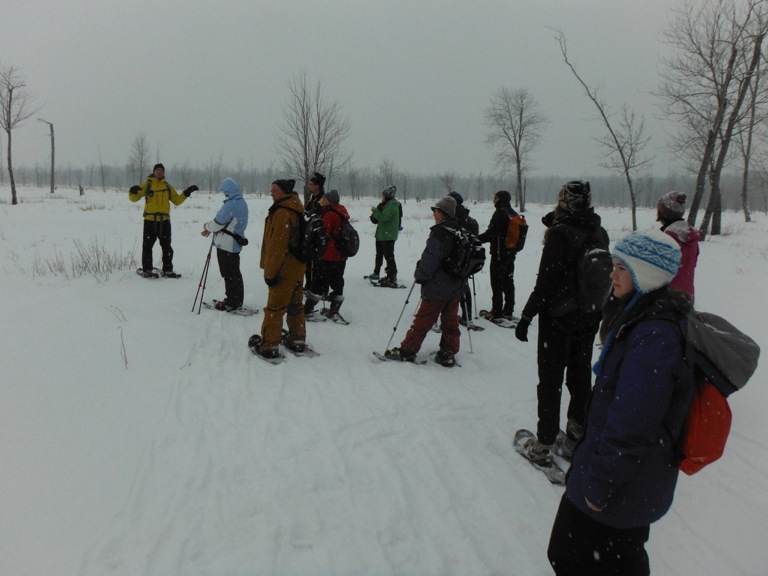
From a recent analysis of forest cover in the Minesing Wetlands, Sean Rootham reported a 60% decline in deciduous floodplain forest between 1953 and 2013. This forest decline has led to a significant shift in wetland structure in the Minesing Wetlands where closed canopy swamp forest (floodplain and boreal) once constituted the majority of the wetland habitat, now, open canopy habitats (marsh, fen, thicket swamp) predominate.
Talking About Forest Change

Talking About Forest Change

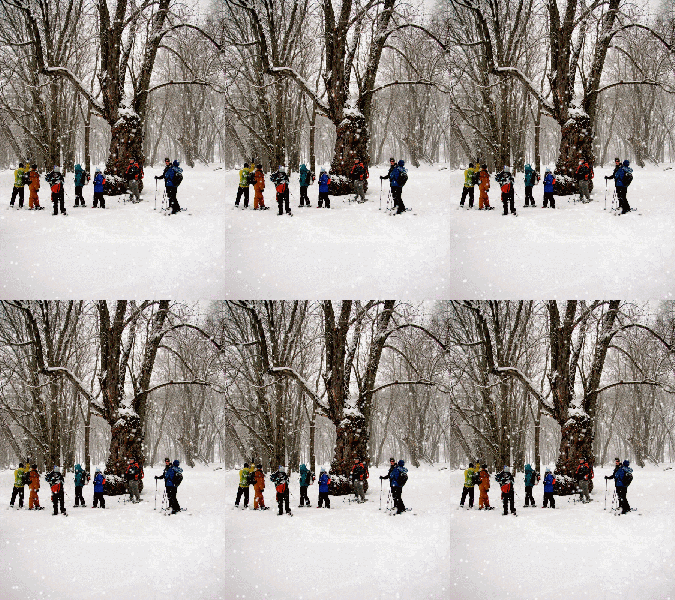
The group of friends collected fruit from Hackberry trees along the Nottawasaga River levee, which will support afforestation projects aimed to bolster remaining deciduous floodplain forest in the Minesing Wetlands.

Hackberry Fruit Collection

Hackberry Fruit Collection

Also on the snowshoe the FOWM identified the nesting site of Great Blue Herons in the Minesing Wetlands. We confirmed 8 nests and 2 “maybes”.

It was a fun winter activity on a perfect winter day for the Friends of Minesing Wetlands showing once again that the Minesing Wetlands truly is a “wetland for all seasons”.
image