Spring Paddles 2014

Paddle the Minesing Wetlands

The Friends of Minesing Wetlands (FOMW) are excited to announce the dates for our annual spring paddle in the Minesing Wetlands.  They are:

April 12, 2014

May 3, 2014

May 17, 2014

To R.S.V.P. for one of these paddles (space is limited) please contact nsaunders@nvca.on.ca

All trips depart from the Willow Creek Canoe Coral on George Johnson Road (County Road 28) and will take approximately 5 hours.

Dress appropriately for the conditions of the day, which should include high cut boots for possible portages.  Bring your own warm drinks, water, and snacks for the go – as well as a packed lunch for our break around noon.

Midday break for lunch

Midday break for lunch

At least a basic paddling know-how is required for this trip and ensure that you bring the required safety equipment for your boat (life jacket, bailer, throw rope, whistle, flashlight). We can arrange for the rental of canoes and life jackets if needed.

The cost is $40 for non-members and $20 for members.  This includes safe passage with certified leaders and ecological interpretation of the Minesing Wetlands.
Heronry Snowshoe March 1

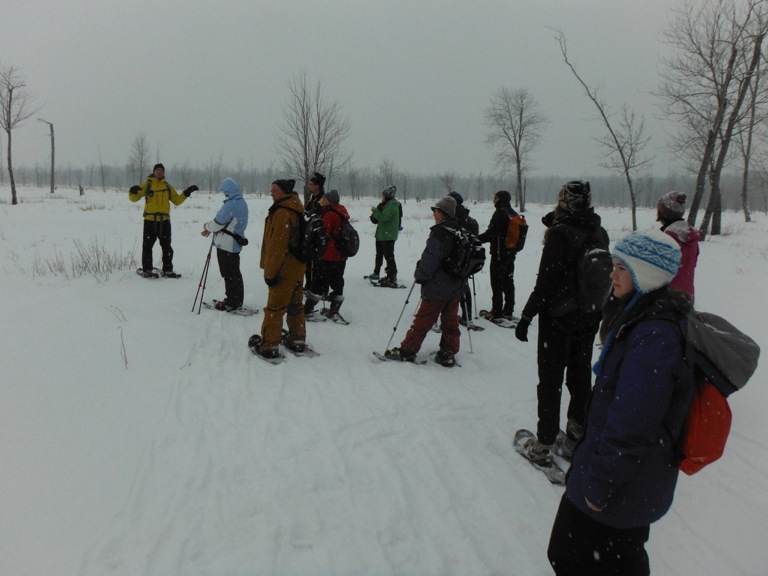
On March 1 the Friends of Minesing Wetlands led another successful tour into the Minesing Wetlands

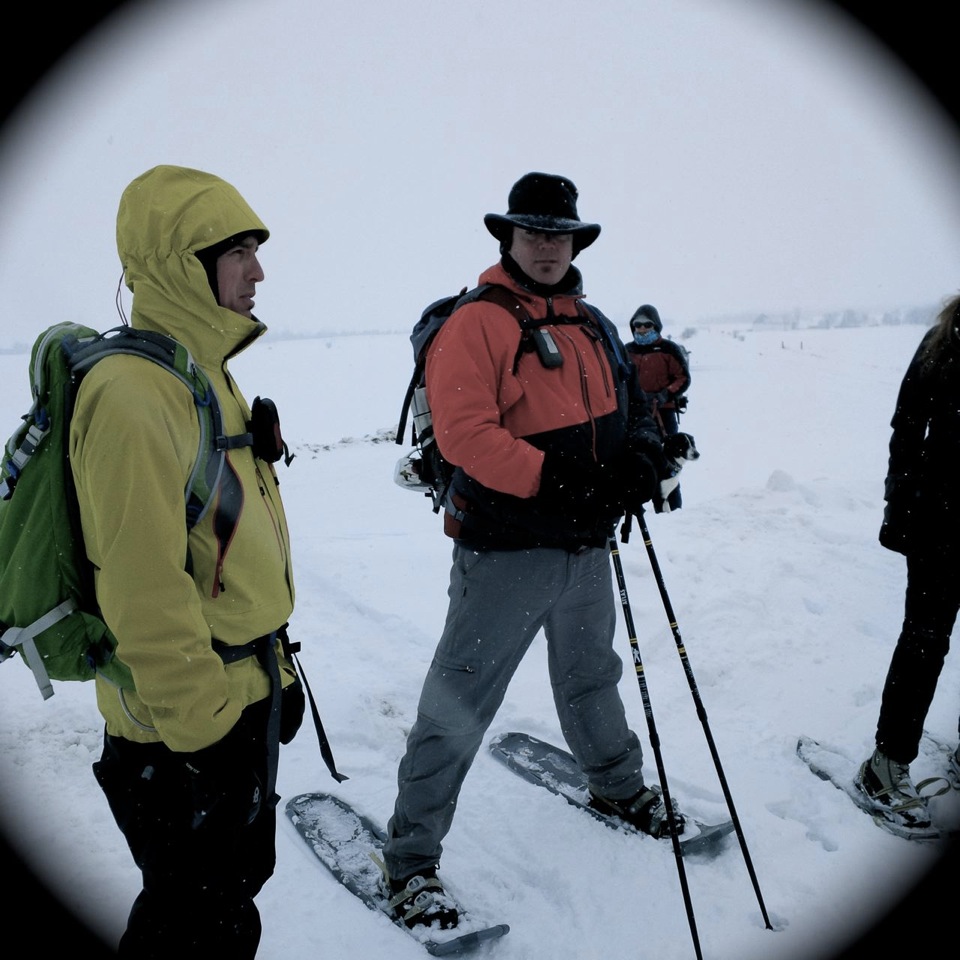
FOMW trip leaders Sean and Dave

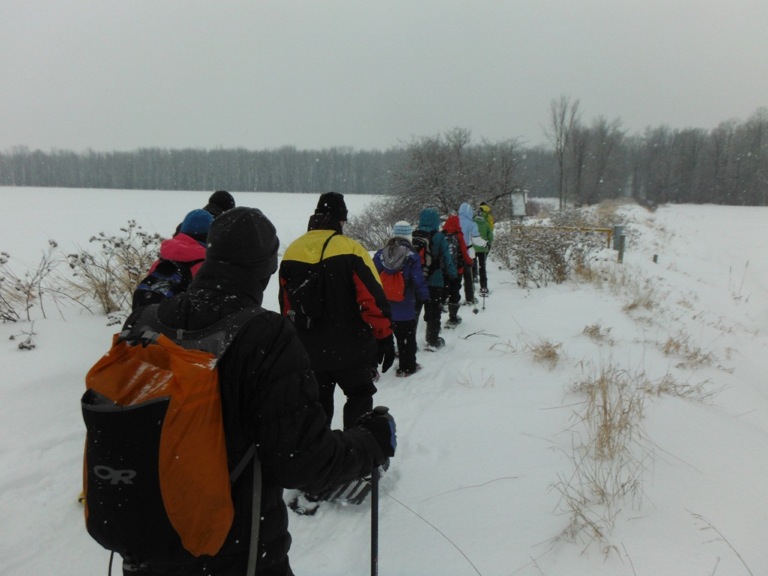
Weather conditions were very similar to the snowshoe a month earlier with overcast skies and cold temperatures, but it didn’t take long to warm up once we started snowshoeing.

Friends starting off for the heronry

FOMW begin snowshoe to the Minesing Wetlands heronry

Along the way we came across evidence of active wildlife in the wetlands including an Otter track (slide) that lead to a hole marking the entrance to its hunting grounds under frozen Willow Creek. In the trees along the Nottawasaga River we could here the calls of woodpeckers.

The group collected Hackberry fruit again, which will end up in a nursery for up to 4 years before being planted along the Nottawasaga River levee as part of an afforestation project aimed to bolster forest cover in the Minesing Wetlands.

Gathering the low hanging fruit!

Gathering the low hanging fruit!

From the levees of the Nottawasaga river we pushed out onto the frozen floodplains where the Great Blue Heron nesting site (heronry) is located. As reported earlier this month we confirmed 8 nests. The decline in nests in the Minesing Wetlands could be attributed to declining forest cover (less suitable nesting sites) and, as pointed out by our trip  leaders,  territory issues related to neighboring Bald Eagle nests.

Across the floodplain

Across the floodplain

It was a fun and educational day that gave our guests a unique look at the Minesing Wetlands. Thanks to all who participated!

Second Snowshoe to Minesing Heronry

The Friends of Minesing Wetlands will be leading a second snowshoe to the Minesing Wetlands heronry on Saturday March 1, from 10am until approximately 2pm. Departure is from the corner of Glengarry and Ronald Road.

The snowshoe is a moderate hike to the current Great Blue Heron nesting site in the Minesing Wetlands. This heronry is one of Southern Ontario’s oldest and was once one of the largest. The nesting sites are located close to the Nottawasaga River levee where more stable trees provide nesting habitat for these big birds!

The FOMW are supporting afforestation initiatives in the Minesing Wetlands by collecting Hackberry tree seeds, which will act as nursery crop for tree planting projects aimed at bolstering tree cover in the wetlands. Improving forest habitat for will benefit birds, fish and other wildlife.

To be a part of this special look at the Minesing Wetlands contact minesingwetlands@gmail.com

The cost of this trip is $15 for non-members and $10 for members.  If you are interested in further supporting the Minesing Wetlands, our yearly membership is $20 and includes a Conservation Lands Pass from the Nottawasaga Valley Conservation Authority.

Minesing Reeds – Winter 2014

The Friends of Minesing Wetlands have published their Winter 2014 edition of the Minesing Reeds.

Featured articles include:

  • A Forestry Adventure on the Nottawasaga River
  • Recap of FOWM 2013 AGM and “Funspeil”
  • Forest Change in the Minesing Wetlands
  • Two Men, Two Kayaks and a Minesing Story

For past editions see the Minesing Reeds Newsletters tab

Highlights from February 1, 2014 Snowshoe

The Friends of the Minesing Wetlands celebrated World Wetlands Day by leading a snowshoe into the Minesing Wetlands. Our goal was to locate the current location of heronry (or rookery) and get a count on the current number of nests. We also wanted to share knowledge on past and current ecological conditions in the Minesing Wetlands.

It was a blustery day to for a snowshoe led by FOWM directors Sean Rootham, Dave Featherstone and David Walsh…

And we're off

And we’re off!

The FOMW crossed Willow Creek and then on to the Nottawasaga Levee. Although the overcast skies and heavy snow limited views, the group was still able to see the expansive floodplain. We came across examples of challenges facing the Minesing Wetlands including invasive species.

Phragmites at Downey Drain Crossing

Phragmites at Downey Drain Crossing

From a recent analysis of forest cover in the Minesing Wetlands, Sean Rootham reported a 60% decline in deciduous floodplain forest between 1953 and 2013. This forest decline has led to a significant shift in wetland structure in the Minesing Wetlands where closed canopy swamp forest (floodplain and boreal) once constituted the majority of the wetland habitat, now, open canopy habitats (marsh, fen, thicket swamp) predominate.

Talking About Forest Change

Talking About Forest Change

The group of friends collected fruit from Hackberry trees along the Nottawasaga River levee, which will support afforestation projects aimed to bolster remaining deciduous floodplain forest in the Minesing Wetlands.

Hackberry Fruit Collection

Hackberry Fruit Collection

Also on the snowshoe the FOWM identified the nesting site of Great Blue Herons in the Minesing Wetlands. We confirmed 8 nests and 2 “maybes”.

It was a fun winter activity on a perfect winter day for the Friends of Minesing Wetlands showing once again that the Minesing Wetlands truly is a “wetland for all seasons”.

image

Snowshoe the Minesing

Minesing Snowscape

Attention winter activity enthusiasts! On February 1 the Friends of Minesing Wetlands, in collaboration with the Nottawasaga Valley Conservation Authority, will be leading a snowshoe into the Minesing Wetlands.

The snowshoe will take us to one of Ontario’s oldest and largest Great Blue Heron nesting sites (Heronry).  Along the way expect to be dazzled by the landscape and possibly encounter some hardy wildlife that endure Canada’s winter.  On past snowshoe adventures we have encountered Snowy Owls and Bald Eagles!  NVCA Ecologist Dave Featherstone will provide ecological interpretation of the Minesing Wetlands.

Freinds of Minesing Wetlands

The adventure will require approximately 3 hours of snowshoeing, which includes periodic breaks.  Bring your own snacks, water and warm drinks, and dress appropriately for winter weather!

Departure time on February 1 is 10 am from Ronald Rd/Glengarry Rd!

Email us at minesingwetlands@gmail.com to register

$10 for members $15 for non-members

See the FOMW on Facebook and Twitter

Protecting a Sensitve Wetland

Vehicle Access Barriers and Signage
Motorized vehicle use on NVCA lands in the wetlands is a prohibited and damaging activity, yet there was little in the way of either physical or visual barriers on some of the access points. Enforcement is also difficult and as a result, mud truck and all terrain vehicle operators caused significant damage to sensitive areas within the wetlands. In response, seven vehicle access barriers and signs at popular access points were installed in 2001. Similar barriers were successful at deterring operators of motorized vehicles from gaining access to sensitive areas in other parts of the province and so they were strategically located around Minesing wetlands to attempt to prevent further damage to systems such as the string fens. The final step in the project was the production and circulation of Fact Sheets regarding motorized vehicle damage in wetlands.

The official unveiling took place on October 9th, at the junction of Ronald Road and Glengarry Landing Road South, just west of Minesing. In attendance were local politicians, NVCA members, the media and representatives from TD Canada Trust Friends of the Environment Foundation, through which we received the funding for such an ambitious undertaking.

SPONSORS & CREDITS
Major funding dollars were provided by the TD Canada Trust Friends of the Environment Foundation. FOMW received contributions of materials, time and equipment from Munro Concrete in Barrie, and had a significant partner in the Nottawasaga Valley Conservation Authority for experienced staff time, equipment use, and administrative resources.

Willow Creek Canoe Lanuch

Willow Creek Canoe LaunchThe Willow Creek Canoe route access point where the Willow Creek crosses County Road 28 is a popular and busy site. The banks of the waterway are slippery and the current fast, so the launching of canoes can be difficult. The construction of a canoe launch dock was undertaken in 2003 through the efforts of a local environmental consulting firm.